Announcements
No announcements yet
New blog posts

Will AI Really Kill Us All? The Science Behind the Hype
27 September, 2026 by Mehrdad Fathi
Concerns that artificial intelligence might...

Why GLP-1 Drugs Work Like Magic for Some — and Barely Work at All for Others
26 September, 2026 by Mehrdad Fathi
The GLP-1 drugs — semaglutide, tirzepatide,...
_674f5.png "The Underground Hydrogen Rush: A Cheap Green Fuel or Just a Pipe Dream?")
The Underground Hydrogen Rush: A Cheap Green Fuel or Just a Pipe Dream?
20 September, 2026 by Mehrdad Fathi
For most of the past century, the idea that...
Journals





Weather

15°C
Calendar of Events
Clean, sustainable fuel produced from plastic garbage
Posted on 8 July, 2023 by benyamin chahkandi
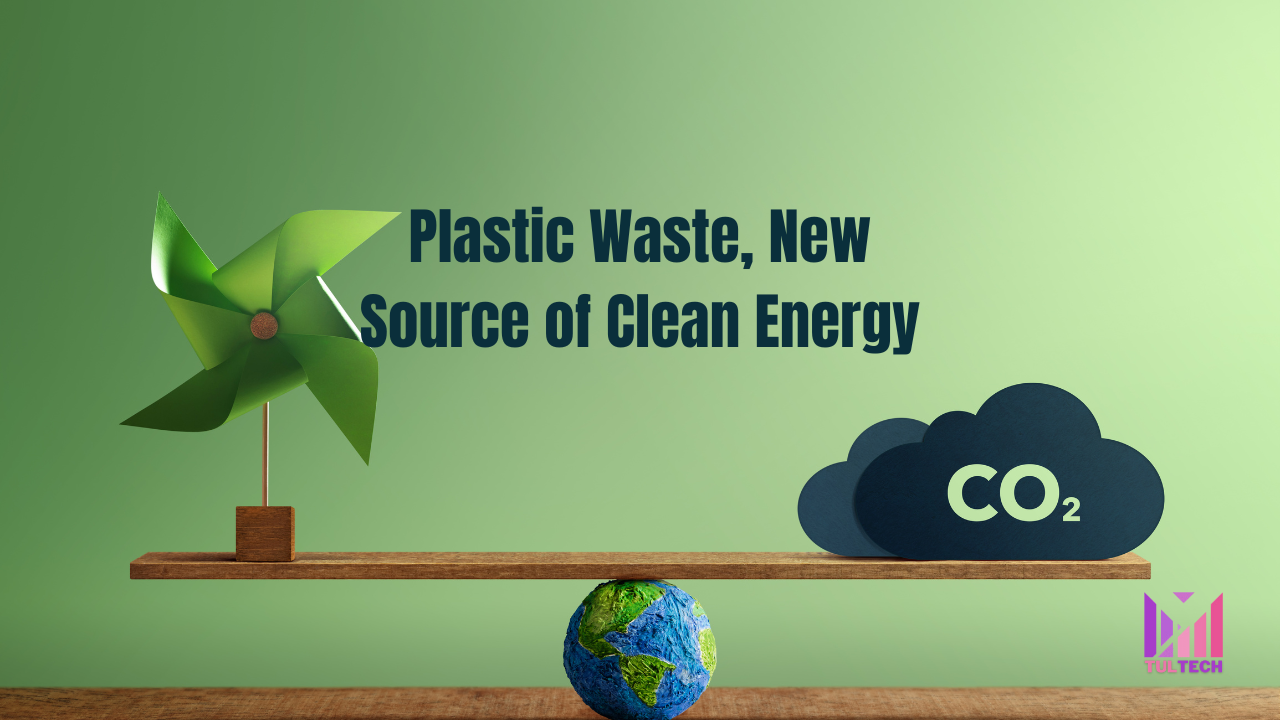
Summary: Researchers have shown how carbon dioxide from industrial operations or even straight from the air can be gathered and converted into sustainable, clean fuels using only solar energy.
The University of Cambridge researchers created a solar-powered reactor that transforms collected CO2 and plastic waste into renewable fuels and other useful chemical compounds. In experiments, CO2 was transformed into syngas, an essential component of sustainable liquid fuels, and plastic bottles into glycolic acid, a substance used extensively in the cosmetics sector.
However, in contrast to past testing of their solar fuels technique, the team used CO2 from actual sources, including industrial exhaust or ambient air. The CO2 was concentrated and captured by researchers, who then used it to create sustainable fuel.
The findings, which were published in the journal Joule, represent another significant step towards the creation of clean fuels to power the economy without the need for environmentally harmful oil and gas extraction, even though advancements must be made before this technology can be deployed on an industrial scale.
The Yusuf Hamied Department of Chemistry's research team, led by Professor Erwin Reisner, has been employing artificial leaves for several years to create sustainable, net-zero carbon fuels that are inspired by photosynthesis, the process by which plants turn light into food. Using only solar energy, these artificial leaves transform CO2 and water into fuels.
They have employed pure, concentrated CO2 from a cylinder in their solar-powered trials up to this point, but for the technology to be useful, it must be able to actively capture CO2 from industrial processes or straight from the air. But since CO2 is simply one of many different kinds of molecules in the air we breathe, it will be extremely difficult to develop a system that is discriminating enough to convert highly diluted CO2.
Reisner added, "We need to entirely eliminate fossil fuels in order to build a truly circular economy. We're not just interested in decarbonization, but de-fossilization. "In the short term, this technology could reduce carbon emissions by capturing them from industry and converting them into something useful, but in the long run, we need to completely eliminate fossil fuels and capture CO2 from the atmosphere."
The carbon capture and storage (CCS) process, in which CO2 is trapped, pumped underground, and then stored, served as inspiration for the researchers.
According to Reisner, CCS is a technology that is well-liked by the fossil fuel industry as a means of lowering carbon emissions while maintaining oil and gas exploration. But if we had carbon capture and utilisation rather than carbon capture and storage, we could utilise CO2 instead of burying it underground with unknowable long-term effects and do away with the need for fossil fuels.
The researchers modified their solar-powered device so that it can convert CO2 and polymers into fuel and chemicals using just solar energy, and it now operates with flue gas or directly from the air.
The CO2 is trapped when air is bubbled through a system containing an alkaline solution, while the nitrogen and oxygen that are also present in the air harmlessly bubble out. The CO2 from air in solution can be concentrated by the researchers using this bubbling method, making it more manageable.
An anode and a photocathode are both parts of the integrated system. In the first of the system's two compartments, trapped CO2 solution is transformed into syngas, a straightforward fuel. On the other hand, using simply sunlight, plastics are transformed into valuable compounds.
The plastic component, according to co-first author Dr. Motiar Rahaman, is a key component of this system. The chemistry is more challenging when CO2 from the air is captured and used. However, when plastic garbage is introduced to the system, it contributes electrons to the CO2. The CO2 is transformed into syngas, which is a straightforward fuel, and the plastic decomposes to glycolic acid, which is widely utilised in the cosmetics industry.
According to co-first author Dr. Sayan Kar, "This solar-powered system takes two harmful waste products -- plastic and carbon emissions -- and converts them into something truly useful."
Rahaman added, "We can catch CO2 from the air and generate clean fuel from it, instead of storing it underground, like in CCS. We can remove the fossil fuel industry from the fuel production process in this way, which should help us prevent catastrophic climate change.
The fact that we can efficiently extract CO2 from the air and turn it into something useful is unique, according to Kar. It's gratifying to realise we can complete the task utilising simply sunshine.
To demonstrate the advantages of integrating direct air capture with CO2 utilisation as a path to a zero-carbon future, scientists are now developing a bench-top demonstrator device with better efficiency and usability.
source: www.sciencedaily.com/releases/2023/06/230619120149.htm
Event Categories
Past Events

Workshop on Artificial Intelligence Applications in Smart Cities
20 August, 2024
Workshop on Advanced Water Treatment Processes
10 July, 2024
Workshop on Water Recycling Simulation and Modelling
15 March, 2024Today In History
Here are some interesting facts ih history happened on 27 September.
- Society of Jesus (Jesuits) founded by Ignatius Loyola
- Battle of Germantown; Washington defeated by the British
- Constitution submitted to the states for ratification
- Railroad transportation is born with 1st track in England
- Steamer Arctic is lost
- Chicago Cubs beat Troy 10-8 before record small "crowd" of 12
- Bob Shawkey sets then Yank record with 15 strike outs
- Democratic National Committee voted to admit women
- Yanks beat Indians 21-7 in Polo Grounds
- Lou Gehrig's 1st homer
- The ocean liner Queen Elizabeth was launched at Glasgow
- Floyd Giebells 1st game 2-0 pennent clinching beating Bob Feller
- 1st WWII liberty ship freighter Patrick Henry launched
- NY Giants beat Wash Redskins 14-7 without making a 1st down
- Steve Allen's Tonight Show premiers
- US sells Israel Hawk anti-aircraft missiles
- Warren Commission finds that Lee Harvey Oswald acted alone
- Cardinal's super pitcher Bob Gibson's 13th shutout of the year
- In 1st game at Coliseum Rangers beat Islanders 6-4 - Exhibition
- Soyuz 12 launched